
The Story of Mean Joe Greene
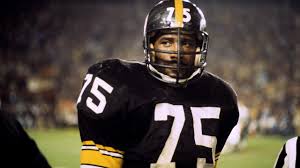
Mean Joe Greene faced rejection from his high school football team before becoming one of the most intimidating defensive tackles in NFL history. The four-time Super Bowl champion wasn't always destined for greatness. Initially disappointed about joining the struggling Pittsburgh Steelers, Greene transformed both his own career and the franchise's trajectory through sheer determination and unmatched skill.
Throughout his journey from Temple, Texas to the Pro Football Hall of Fame, Greene overcame segregation, limited opportunities, and personal challenges. His fierce playing style earned him a legendary nickname, while his iconic Coca-Cola commercial revealed a gentler side to fans nationwide. Consequently, his legacy extends far beyond his dominance on the field, influencing generations of defensive players and cementing his status as a pivotal figure in football history.
From Temple, Texas to North Texas State
Charles Edward Greene was born on September 24, 1946, in Elgin, Texas, but grew up in Temple . Unlike many NFL legends whose talent was recognized early, Greene's path to greatness faced numerous obstacles from the beginning.
Early life and high school football challenges
Growing up in Temple, Texas, Greene's only family support came from his mother, Cleo Thomas, as his father abandoned the family early in his life . At Dunbar High School, a segregated institution in Temple, Greene's imposing physical presence was already evident. He towered over teammates and opponents alike, standing 6'3" tall and weighing 225 pounds.
Despite his intimidating size, Greene wasn't always the dominant force fans would later recognize. "When I started playing, I was very timid," Greene admitted. "I used to get beat up quite a bit, on and off the field. But something happens when you're out there on the field: You want to win. You're oblivious to everything else. Eventually, my desire to win overcame my fear".
Greene's high school team struggled despite his natural abilities. The Dunbar Panthers maintained a mediocre record throughout his time there. As a result, college recruiters rarely visited their games, leaving his extraordinary talent largely unnoticed.
Segregation and limited college opportunities
The harsh reality of segregation in the 1960s further complicated Greene's collegiate prospects. During this era, the prestigious Southwest Conference schools remained segregated, significantly limiting options for African American athletes regardless of their talent.
Following his 1965 high school graduation, Greene received just a handful of offers. He was invited to visit Texas A&I in Kingsville, Prairie View, and New Mexico State in Las Cruces. Looking for additional opportunities, Greene took initiative and wrote a letter directly to North Texas State after reading about Abner Haynes, an African American football player who had succeeded there before launching a professional career.
Breakthrough at North Texas State University
North Texas State responded by inviting Greene to campus, where Coaches Fred McCain and Odus Mitchell welcomed him warmly. In a moment that would change football history, Greene recalled peaking through a window into the coaches' office before his interview: "I had a flash and went to the men's room and did about 15 push-ups — that was about my limit. I was probably 6 foot, 3 inches, and around 235 pounds. When I walked in, they all stood up and offered me a scholarship on the spot. They hadn't seen anyone on our campus that was big like me".
From 1966 to 1968, Greene developed into one of college football's most dominant defensive forces. Under coach Odus Mitchell's guidance, North Texas achieved remarkable success, posting a 23-5-1 record during Greene's three varsity seasons. His impact was immediately evident - in 29 games as defensive tackle, North Texas limited opponents to just 2,507 yards on 1,276 rushing attempts, an astonishing average of less than two yards per carry.
Greene's collegiate dominance earned him three consecutive All-Missouri Valley Conference selections. In his senior year, his extraordinary play culminated in consensus All-American honors for the 1968 season. During this time, Greene also married fellow student Agnes Craft, with the ceremony held at Agnes's sister's house due to their limited financial resources.
His college coach, Rod Rust, recognized Greene's unique abilities: "There are two factors behind Joe's success. First, he has the ability to make the big defensive play and turn the tempo of a game around. Second, he has the speed to be an excellent pursuit player". Another scout described him more bluntly as "tough and mean" and "mobile and hostile".
The Birth of 'Mean Joe'
Few nicknames in sports history have carried the weight and recognition of "Mean Joe Greene." The moniker became synonymous with one of football's most dominant defenders, yet its origins remain surrounded by competing narratives and conflicting accounts.
How the nickname originated
The nickname's birth can be traced back to Greene's college days at North Texas State University in 1966. At that time, North Texas teams were known as the Eagles, not the "Mean Green." Interestingly, both the team and Joe adopted their "mean" labels around the same period.
Two distinct origin stories have emerged over the decades. One version credits Sidney Sue Graham, wife of the university's sports information director. According to this account, she spontaneously shouted, "That's the way, Mean Greene!" after witnessing a particularly impressive tackle by Joe Greene during a 1966 game against UTEP (then Texas Western College). Her husband, Fred Graham, initially dismissed the nickname as "too corny" but later incorporated "Mean Green Defensive Unit" into press releases.
Meanwhile, an equally compelling version attributes the nickname to North Texas basketball players Willie Davis and Ira Daniels. Disappointed by the lackluster crowd energy during the same 1966 UTEP game, they reportedly began singing, "Mean Green, you look so good to me". Davis, one of Greene's closest friends, later admitted they "had a little too much to drink" during the chanting.
"After that we did it every game," Davis explained. "A lot of people later on started associating it with Joe because his last name was Greene, but it actually started with that simple chant that Saturday night at Fouts Field. And that's the truth".
The dual meaning behind 'Mean Green'
The similarity between Greene's surname and the university's color created a perfect opportunity for wordplay. Although the chant originally referred to North Texas' defense—statistically one of the nation's top-ranked units at the time—it soon became attached to Joe specifically as he anchored that formidable unit.
The nickname followed Greene to the NFL after the Pittsburgh Steelers drafted him. Local Pittsburgh media, learning he had played for the "Mean Green," began calling him "Mean Joe Greene". This dual meaning—referencing both his playing style and his college team's nickname—cemented the moniker in football lore.
Joe's personal feelings about the nickname
Despite the fame it brought him, Greene himself harbored mixed feelings about being labeled "mean." "I just want people to remember me as being a good player and not really mean," he once stated. "I want to be remembered for playing 13 years and contributing to four championship teams. I would like to be remembered for maybe setting a standard for others to achieve".
Initially hesitant about the nickname, Greene's perspective shifted after visiting the Pro Football Hall of Fame with his wife. There, he noticed many legendary players had colorful monikers: Night Train, Crazy Legs Hirsch, Slingin' Sammy. Subsequently, he embraced his own.
His perspective toward the nickname transformed completely after starring in a famous 1979 Coca-Cola commercial during Super Bowl XIV. The advertisement showed a softer side of Greene, with him giving his jersey to a young fan who offered him a Coke .
"Prior to that I was identified as this tough, snarling kind of a guy only to be a big ol' teddy bear," Greene reflected. "It all flipped, just like that. That snarl I had developed didn't work. People couldn't take me seriously after that".
As for the "Joe" part of his name? That came from an aunt who thought baby Charles resembled heavyweight boxing champion Joe Louis.
Draft Day Doubts and Rookie Redemption
The Pittsburgh Steelers selected Charles Edward Greene with the fourth overall pick in the 1969 NFL Draft, a decision that would alter the franchise's trajectory forever. However, the selection was initially met with disappointment from both sides.
Initial disappointment with being drafted by the Steelers
"It was almost crushing," Greene admitted about being drafted by Pittsburgh. "They had the fourth pick and that means you lose a lot of ball games". The selection proved unpopular with fans and media as well, who had hoped for a more exciting player than the relatively unknown Greene.
"I did not, did not want to be a Steeler," Greene confessed in a 2013 interview. His reluctance was understandable—the Steelers were among the most downtrodden franchises in the NFL at that time. Indeed, Greene's first year with the team resulted in a dismal 1-13 record.
"Every Tuesday we had four or five new guys come in for tryouts," he recalled. "Our team had new faces every week because for the most part we weren't very good. I don't think the atmosphere was positive".
Immediate impact and Defensive Rookie of the Year
Nevertheless, Greene immediately established himself as one of the most dominant players at his position. Playing left tackle, he was named the NFL Defensive Rookie of the Year in 1969 and received his first of ten Pro Bowl invitations.
In a matter of months, Greene had transformed from an unknown draft pick into a formidable defensive force. Throughout his career, he would be armed with speed, quickness, strength, and great determination. At his peak, Greene could dominate a game almost single-handedly.
Building the foundation of the Steel Curtain
Greene and newly hired head coach Chuck Noll are widely credited with turning the Steelers franchise around. "My very, very first day as a Steeler, in training camp, Chuck said our goal is to win a Super Bowl and there were some chuckles going on in that room," Greene remembered. "A couple of them were cut because of it".
Greene became the cornerstone of what would evolve into the legendary "Steel Curtain" defense. With the drafting of defensive tackle Ernie Holmes in 1972, the Steelers assembled the complete Steel Curtain defensive line of Greene, Holmes, L.C. Greenwood, and Dwight White.
Former teammate Andy Russell called Greene "unquestionably the NFL's best player in the seventies," adding that "no player had a greater impact or did more for his team".
Dominance, Discipline, and the Steel Curtain Era
The legendary Steel Curtain defense solidified its place in NFL history through Greene's unprecedented dominance on the field. By 1972, Pittsburgh had assembled their famed defensive line of Greene, Ernie Holmes, L.C. Greenwood, and Dwight White, forming what would become the cornerstone of a football dynasty.
Super Bowl victories and defensive leadership
Greene's transformation of the Steelers culminated in four Super Bowl championships in just six years from 1974-1979. His performance in Super Bowl IX against Minnesota proved particularly legendary—he recorded an interception, forced fumble, and fumble recovery while helping limit the Vikings to just 17 rushing yards. As Chuck Noll noted, "From an attitude standpoint, a desire, he'd do whatever you had to do to win".
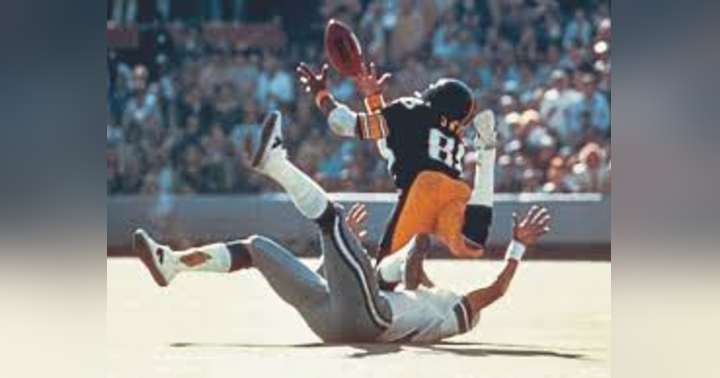
In 1977, Greene's natural leadership abilities were formally recognized when he was named captain of the defense. His influence extended beyond defensive players—even wide receiver Lynn Swann considered Greene a mentor, noting, "If you were giving less than 100 percent, he let you know one way or the other".
The 'stunt 4-3' innovation
Perhaps Greene's most significant tactical contribution came in 1974 when he developed the revolutionary "stunt 4-3" technique. Instead of lining up directly opposite a lineman, Greene positioned himself at a sharp angle between the guard and center, disrupting blocking schemes with his incredible quickness off the ball.
The coaching staff initially hesitated to implement this innovation during the regular season. Greene finally deployed it in the division championship game against Buffalo, limiting superstar running back O.J. Simpson to just 48 yards. The following week against Oakland in the AFC Championship, Greene threw All-Pro center Jim Otto to the ground with one arm before leaping to sack quarterback Ken Stabler, helping hold the Raiders to only 29 rushing yards.
Infamous moments and emotional intensity
Greene's competitive fire occasionally manifested in controversial ways. According to Terry Bradshaw, during a game in Cleveland, Greene once "took his helmet off... and threw it into the stands". Even Coach Noll struggled to control Greene's emotional outbursts.
Nonetheless, Greene's intensity commanded respect throughout the league. Miami Dolphins head coach Don Shula remarked, "He's just a super super star. It's hard to believe he isn't offside on every play. He makes the other team adjust to him".
Mentorship and team influence
Beyond his physical dominance, Greene's presence shaped team culture. Joe Gordon of the Steelers front office recalled how Greene once silently glared at a complaining teammate, instantly ending the player's grievances without saying a word. This quiet authority exemplified his leadership style—leading through performance rather than rhetoric.
As Chuck Noll explained, "Everybody thinks leadership comes from how you talk, but it really doesn't. Leadership on the field from a football player is how you perform".
Beyond the Field: Media, Coaching, and Legacy
Joe Greene's cultural impact extends far beyond his playing career, most notably through his iconic 1979 Coca-Cola commercial. Debuting during Super Bowl XIV, the "Hey Kid, Catch!" advertisement transformed his intimidating image overnight. Greene reportedly consumed 18 bottles during filming while struggling to deliver lines without burping. The commercial won a Clio Award and made history as one of the first national ads featuring a Black male athlete.
The Coca-Cola commercial and public image shift
The commercial's success shifted public perception dramatically. "After the commercial, people would all come up and ask 'Want my Coke?'" Greene recalled. His wife Agnes noted, "It changed Joe's personality a lot because so many kids were looking up to him, he decided he really wanted to be a role model".
Acting roles and cultural presence
Throughout the 1970s, Greene ventured into acting. He appeared in several films including "The Black Six" (1973), "Horror High" (1973), and "Lady Cocoa" (1975). Following retirement, he briefly worked as a CBS Sports color analyst in 1982.
Coaching career and front office contributions
Greene's post-playing career included coaching defensive lines for the Steelers (1987-1991), Dolphins (1992-1995), and Cardinals (1996-2003). Afterward, he joined Pittsburgh's front office as special assistant for player personnel, contributing to two more Super Bowl championships.
Hall of Fame inductions and jersey retirement
Inducted into the Pro Football Hall of Fame in 1987, Greene also entered the College Football Hall of Fame in 1984. In 2014, the Steelers retired his No. 75 jersey—only the second player in franchise history after Ernie Stautner to receive this honor. During the emotional ceremony, Greene stated, "This wouldn't be happening without my teammates, without Chuck Noll".
Mean Joe Greene's journey from a high school football player in segregated Temple, Texas to NFL superstardom epitomizes the power of perseverance. Despite initial disappointment at joining the struggling Steelers, Greene transformed both his career and an entire franchise through sheer determination. His development of the innovative "stunt 4-3" technique changed defensive strategies forever, while his fierce leadership built the foundation for the legendary Steel Curtain defense.
Greene's impact extended far beyond his four Super Bowl victories and ten Pro Bowl appearances. The famous Coca-Cola commercial revealed a softer side that fans embraced, consequently shifting his public image from intimidating defender to beloved role model. His post-playing contributions as a coach and front office executive further cemented his football legacy.
Undoubtedly, few players in NFL history have matched Greene's combination of physical dominance and emotional leadership. The retirement of his No. 75 jersey stands as a fitting tribute to a man who elevated an entire franchise from perennial losers to dynasty status. Though initially reluctant to embrace his "Mean Joe" nickname, Greene ultimately defined what it truly meant - not merely aggression, but rather an uncompromising pursuit of excellence that changed football forever.
Greene's story reminds us that rejection often precedes greatness. The high school player once described as "timid" became the cornerstone of perhaps the greatest defense in NFL history. His journey from segregated schools with limited opportunities to the Pro Football Hall of Fame proves that extraordinary talent combined with relentless determination can overcome almost any obstacle. Charles Edward Greene wasn't just a football legend - he was a transformative figure whose influence continues to shape the game he dominated.
Legendary Steeler Lynn Swann