
The Career Of Ben Roethlisberger
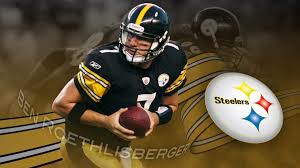
Ben Roethlisberger stats tell the story of one of the NFL's most resilient quarterbacks. Few players have shocked the football world with their consistent excellence quite like Big Ben did throughout his remarkable 18-season career.
Initially selected 11th overall in the 2004 NFL Draft, Ben Roethlisberger transformed the Pittsburgh Steelers franchise into a perennial contender. The 6'5" quarterback from Miami University defied expectations at every turn, collecting impressive numbers and championship rings while cementing his place among football's elite. During his tenure with the Steelers, he amassed statistics that not only defined an era in Pittsburgh but also rewrote portions of the NFL record book.
This deep dive examines the most jaw-dropping numbers behind Roethlisberger's legendary career—from his perfect rookie season to his final comeback performances. Whether you're a dedicated Steelers fan or simply appreciate greatness, these statistics reveal why Big Ben's impact on professional football extends far beyond the conventional box score.
The Early Numbers: Roethlisberger’s Rookie Impact
Few rookie quarterbacks have made as immediate an impact as Big Ben did when he first stepped onto NFL fields. The Pittsburgh Steelers found their franchise cornerstone when they selected the Miami (OH) University standout in the 2004 NFL Draft—a decision that would alter the trajectory of the organization for nearly two decades.
Drafted 11th overall in 2004
The 2004 NFL Draft showcased one of the most talented quarterback classes in league history. When the Steelers' turn came at pick number 11, they faced a crucial decision that would shape their future. Despite Eli Manning and Philip Rivers being selected earlier, the Steelers confidently chose the 6'5" signal-caller from Miami of Ohio.
At the time, many questioned whether Roethlisberger was ready for the NFL spotlight. Coming from a smaller college program, skeptics wondered if his skills would translate to professional competition. Furthermore, the Steelers already had veteran Tommy Maddox as their starter, suggesting Roethlisberger might spend his rookie year developing from the sidelines.
Those plans changed dramatically in Week 2 of the 2004 season when Maddox suffered an elbow injury against Baltimore. Suddenly, the rookie was thrust into the starting role—a moment that would unexpectedly launch one of the most remarkable debut seasons in NFL history.
13-0 record as a rookie starter
When Roethlisberger took over as the Steelers' starting quarterback in Week 3, few could have predicted what would follow. Surprisingly, the rookie led Pittsburgh to 13 consecutive victories, setting an NFL record for the most wins by a rookie quarterback that stood until 2016.
His first NFL start came against the Miami Dolphins in a rain-soaked game where he threw for a modest 163 yards and one touchdown. Nevertheless, it was enough to secure a 13-3 victory—the first of many that season. As the weeks progressed, Roethlisberger's comfort level visibly increased, as did his command of the offense.
What made his rookie campaign particularly impressive was how Roethlisberger managed games. Rather than putting up flashy statistics, he displayed veteran-like decision-making. His poise under pressure became evident in multiple comeback victories, including a crucial win against Jacksonville where he engineered his first game-winning drive.
The streak included victories over several playoff-bound teams:
- A 34-20 win against the defending champion New England Patriots, snapping their 21-game winning streak
- A commanding 27-3 victory against the Washington Redskins
- A dramatic 17-16 win over the New York Jets
By season's end, Roethlisberger had guided the Steelers to a 15-1 record, the best in franchise history at that time.
2004 Offensive Rookie of the Year
Roethlisberger's historic first season earned him the NFL Offensive Rookie of the Year award, making him the first quarterback to win the honor since 1970. His statistics, though not record-breaking in volume, showcased remarkable efficiency: 17 touchdown passes against 11 interceptions with a 98.1 passer rating—the highest ever for a rookie at that time.
In fact, Roethlisberger's rookie passer rating ranked fifth in the entire NFL that season, putting him in elite company alongside established stars like Peyton Manning and Daunte Culpepper. His 8.9 yards per attempt led the entire league, demonstrating his ability to generate explosive plays despite his rookie status.
Beyond the numbers, Roethlisberger's impact was evident in how he elevated the entire Steelers organization. The team improved dramatically from a 6-10 record the previous year to become legitimate Super Bowl contenders. Though their playoff run ended with a loss to New England in the AFC Championship, the foundation had been established for what would become a championship-caliber team.
His rookie season established the blueprint for Roethlisberger's career: winning games through a combination of physical toughness, clutch performances, and an uncanny ability to extend plays. These traits would eventually lead to multiple championships and his place among the NFL's all-time great quarterbacks.
Season-by-Season Stats That Stunned Analysts
Throughout his career, Roethlisberger produced several statistical seasons that left football analysts stunned. His ability to adapt and evolve his game resulted in remarkable numbers that showcased both his longevity and versatility under center for the Pittsburgh Steelers.
2007: 32 TDs with only 11 INTs
In his fourth professional season, Roethlisberger elevated his game to new heights. His 32 touchdown passes set a new Steelers single-season record, showcasing his development as a passer. Notably, he accomplished this while throwing just 11 interceptions, demonstrating significantly improved decision-making.
What made this season particularly impressive was Roethlisberger's efficiency. His 104.1 passer rating ranked second in the NFL that year, trailing only Tom Brady. Moreover, Roethlisberger achieved these numbers in just 15 games, averaging an impressive 7.8 yards per attempt.
His ability to find the end zone was remarkable—at one point during the season, Roethlisberger threw five touchdown passes in a single half, joining Tom Brady as one of only five quarterbacks to accomplish this feat since the 1970 NFL-AFL merger.
2014: 4,952 passing yards (career high)
By 2014, Roethlisberger had evolved into one of the league's premier passers. At age 32, he led the entire NFL in passing yards with 4,952, establishing what was then a personal best. This outstanding production came with pinpoint accuracy—he completed 67.1% of his passes while maintaining excellent ball security with only 9 interceptions against 32 touchdowns.
His consistency throughout the season was impressive. Roethlisberger posted a stellar 103.3 passer rating while guiding the Steelers to an 11-5 record. Additionally, he averaged 8.1 yards per attempt, showcasing his ability to push the ball downfield effectively.
The pinnacle of his 2014 campaign came against Indianapolis when he threw for 522 yards and 6 touchdowns—one of several performances that cemented this as his breakout statistical season.
2018: 5,129 passing yards and 34 TDs
Four years later, Roethlisberger managed to surpass his previous best with an even more prolific season. At 36 years old, he amassed an astounding 5,129 passing yards along with 34 touchdown passes, both career highs. These numbers came on a high volume of attempts—675 pass attempts with 452 completions for a 67.0% completion rate.
His production remained consistent throughout the season. In September alone, he threw for 1,414 yards. His performances included multiple 400+ yard games, highlighted by a 462-yard outing against Denver and a 452-yard performance versus Kansas City.
Perhaps most impressive was Roethlisberger's ability to spread the ball around effectively. He recorded at least one touchdown pass in every game that season and showed remarkable durability by starting all 16 games despite his advancing age.
2020: 33 TDs after elbow surgery
Possibly the most surprising statistical season came in 2020, when Roethlisberger returned from serious elbow surgery at age 38. Many analysts questioned whether he could regain his previous form, yet he responded with 33 touchdown passes against just 10 interceptions in 15 games.
While his yardage total dipped to 3,803, his efficiency remained impressive with a 94.1 passer rating and 65.6% completion percentage. This performance was even more remarkable considering he averaged just 6.3 yards per attempt—adapting his game to a quicker release style that accommodated his recovery.
The comeback was so impressive that Roethlisberger finished second in NFL Comeback Player of the Year voting, guiding the Steelers to a 12-3 record in his starts and demonstrating the resilience that defined his career.
Playoff Performances That Defined a Champion
What truly separates legendary quarterbacks from great ones is playoff performance, and Ben Roethlisberger's postseason stats showcase a player who elevated his game when championships were on the line.
Youngest QB to win a Super Bowl
At just 23 years and 340 days old, Roethlisberger made history as the youngest quarterback ever to hoist the Lombardi Trophy. His remarkable achievement came in Super Bowl XL, where the Steelers defeated the Seattle Seahawks 21-10. Although his personal statistics that day weren't spectacular, his leadership during Pittsburgh's playoff run was undeniable.
Before reaching that milestone, Roethlisberger led the Steelers through an improbable postseason journey as a Wild Card team. Consequently, they became just the second team in NFL history to win three playoff games on the road en route to a championship. His performance against Denver in the AFC Championship game was particularly noteworthy, completing 21 of 29 passes for 275 yards and two touchdowns.
Clutch throws in Super Bowl XLIII
Perhaps Roethlisberger's finest playoff moment came in Super Bowl XLIII against the Arizona Cardinals. Trailing 23-20 with just 2:30 remaining, he orchestrated what many consider one of the greatest drives in Super Bowl history.
On that final possession, Roethlisberger went 6-for-8 passing for 83 yards, culminating in the iconic touchdown pass to Santonio Holmes with just 35 seconds left on the clock. This clutch performance solidified his reputation as a quarterback who thrived under pressure. Throughout that game, he completed 70% of his passes (21 of 30) for 256 yards, displaying remarkable accuracy in the biggest moment.
23 playoff games with 36 TDs
Across his decorated career, Roethlisberger's playoff résumé includes 23 postseason appearances. In those high-stakes contests, he amassed 5,972 passing yards with 36 touchdowns, demonstrating his ability to perform consistently on football's biggest stage.
His playoff efficiency was impressive as well—a 63.2% completion rate and 7.6 yards per attempt across nearly two dozen playoff games. Even more remarkably, Roethlisberger finished with a winning postseason record of 13-10, highlighting his ability to guide the Steelers to victory in elimination games.
Game-winning drives in postseason
Of all Roethlisberger's playoff achievements, his clutch performance in critical moments stands out most. His ability to deliver when the pressure was highest resulted in 3 postseason fourth-quarter comebacks and 4 game-winning drives.
His first playoff game-winning drive came in 2005 against the New York Jets in the Divisional Round. However, his most memorable came in Super Bowl XLIII against Arizona. In addition, Roethlisberger engineered crucial comeback victories against Baltimore (2011) and Cincinnati (2016) that further cemented his legacy as one of the most clutch performers in NFL postseason history.
Advanced Metrics That Proved His Efficiency
Looking beyond traditional box score statistics reveals the true efficiency that made Ben Roethlisberger one of the NFL's elite quarterbacks. Throughout his 18 seasons, his advanced metrics consistently demonstrated why Pittsburgh's offensive success hinged on his remarkable abilities.
Career passer rating of 93.5
Roethlisberger maintained an impressive 93.5 career passer rating across 249 professional games. This efficiency metric placed him ninth all-time at his retirement, ranking him among legendary quarterbacks like Joe Montana and ahead of Hall of Famers Dan Marino and Brett Favre. His rating remained remarkably consistent despite playing through multiple offensive coordinator changes and evolving offensive philosophies. Perhaps most impressively, Roethlisberger achieved this rating while attempting 8,443 passes over his career.
7.6 yards per attempt over 18 seasons
Among efficiency metrics, Roethlisberger's career 7.6 yards per attempt stands out as particularly noteworthy. This figure highlights his ability to push the ball downfield effectively throughout his career. Maintaining such efficiency across nearly two decades in the NFL—especially while playing home games in notoriously difficult weather conditions—underscores his exceptional talent. His yards-per-attempt figure remained consistent whether throwing deep shots or executing Pittsburgh's short passing game, showcasing his versatility as a passer.
Top 10 in career completions and yards
Upon retirement, Roethlisberger ranked fifth all-time in NFL career completions with 5,440 successful passes. Concurrently, he finished his career sixth all-time in passing yards, amassing an astounding 64,088 yards through the air. These rankings placed him in elite company, trailing only legends like Tom Brady, Drew Brees, Peyton Manning, and Brett Favre in both categories. His remarkable accumulation of statistics came despite missing occasional games due to injuries throughout his career.
41 game-winning drives
Roethlisberger's clutch performance metrics truly set him apart from his contemporaries. He engineered 41 fourth-quarter comeback victories during his career, demonstrating remarkable poise under pressure. Furthermore, he orchestrated 53 game-winning drives, tying him for third all-time in NFL history in that category. This clutch gene appeared immediately—his first game-winning drive came during his rookie season against Cincinnati. Consequently, these performances earned him the reputation as one of the NFL's most reliable quarterbacks in high-pressure situations.
Through these advanced metrics, Roethlisberger's statistical legacy stands as a testament to his consistent excellence across nearly two decades of professional football.
Records and Rankings That Cemented His Legacy
Beyond wins and championships, Ben Roethlisberger's numerical achievements continue to astonish football historians. His statistical footprint ranks among the most impressive in NFL history.
6th all-time in passing yards
After 18 seasons with Pittsburgh, Roethlisberger amassed 64,088 passing yards, positioning him seventh all-time upon retirement. This remarkable total placed him alongside quarterback legends like Tom Brady and Drew Brees. Indeed, only a handful of signal-callers in NFL history accumulated more aerial yardage across their careers.
9th in career TD passes
Alongside his yardage production, Roethlisberger finished with 418 career touchdown passes, ranking ninth in NFL history. His touchdown efficiency remained consistent throughout his tenure with the Steelers, as he averaged approximately 23 touchdown passes per season. Certainly, this consistency demonstrated his reliable scoring production across nearly two decades.
Most 500-yard passing games in NFL history
Perhaps his most extraordinary record remains his four 500+ yard passing performances, the most by any quarterback in NFL history. These masterclass performances included:
- 522 yards against Indianapolis (10/26/2014)
- 506 yards against Baltimore (12/10/2017)
- 503 yards versus Green Bay (12/20/2009)
Only QB to throw 6 TDs in back-to-back games
In 2014, Roethlisberger accomplished something unprecedented—throwing six touchdown passes in consecutive games. This record-breaking achievement saw him amass 12 touchdown passes in a two-week span, surpassing the previous mark of 11 held jointly by Tom Flores and Tom Brady. According to football historians, this specific record best exemplifies the explosive potential Roethlisberger maintained even into his thirties.
Ben Roethlisberger's statistical legacy stands as a testament to greatness that transcended typical quarterback metrics. Throughout his remarkable 18-season career, Big Ben repeatedly defied expectations while establishing himself among the NFL's elite.
Few quarterbacks can match his combination of longevity and excellence. His journey from record-setting rookie to Super Bowl champion to statistical powerhouse showcased an athlete who consistently evolved his game. Certainly, his position among the all-time leaders in passing yards, touchdowns, completions, and game-winning drives solidifies his place in football history.
Beyond the numbers, Roethlisberger's resilience defined his career. After major elbow surgery at age 38, many analysts expected decline. Instead, he responded with 33 touchdown passes while leading Pittsburgh to a 12-3 record in his starts. This resilience extended to countless games where he played through injuries that would sideline most quarterbacks.
The most compelling evidence of Roethlisberger's greatness emerges from his clutch performances. His 53 game-winning drives and 41 fourth-quarter comebacks reveal a quarterback who thrived under immense pressure. Additionally, his playoff achievements—particularly that legendary final drive against Arizona in Super Bowl XLIII—demonstrated his championship mentality.
Statistics alone cannot capture what made Big Ben special. His unique playing style combined pocket poise with remarkable physical strength, allowing him to extend plays when others would take sacks. This improvisational ability frequently transformed broken plays into spectacular completions.
Though his career eventually came to its conclusion, Roethlisberger's impact on the Pittsburgh Steelers franchise remains immeasurable. After all, his leadership transformed the organization into a perennial contender while establishing a standard of excellence for future quarterbacks.
The numbers tell an undeniable truth: Ben Roethlisberger wasn't just a franchise quarterback—he was a generational talent whose statistical achievements will amaze football fans for decades to come.
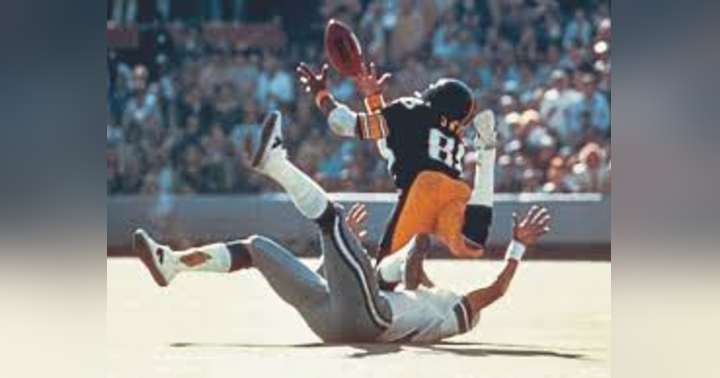
Legendary Steeler Lynn Swann