
Terry Bradshaw: The Steelers Golden Arm
From Louisiana Bayou to Pittsburgh Steel
Terry Paxton Bradshaw emerged from the small town of Shreveport, Louisiana, on September 2, 1948, carrying dreams as big as his powerful right arm. Growing up in a working-class family, young Terry displayed an early affinity for athletics, excelling in football, basketball, and track at Woodlawn High School. His 6'3" frame and cannon arm caught the attention of college scouts, but few could have predicted the legendary career that lay ahead.
The Louisiana Tech Bulldogs became Bradshaw's proving ground, where he honed the skills that would later terrorize NFL defenses. During his college years from 1966-1969, he threw for 7,149 yards and 42 touchdowns, establishing himself as one of the premier quarterbacks in college football. His senior season statistics were particularly impressive, completing 68% of his passes for 2,890 yards.
The Number One Pick and Early Adversity
The Pittsburgh Steelers, mired in decades of mediocrity, saw salvation in the strong-armed quarterback from Louisiana. With the first overall pick in the 1970 NFL Draft, they selected Bradshaw, hoping he would transform their franchise's fortunes. However, the transition from college star to professional quarterback proved more challenging than anyone anticipated.
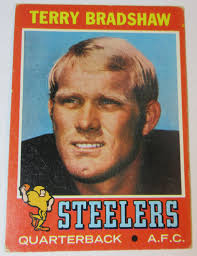
Bradshaw's early NFL years were marked by struggles, criticism, and self-doubt. The Pittsburgh media and fans, hungry for success after years of disappointment, grew impatient with his inconsistent play and occasional interceptions. The pressure mounted as he threw more interceptions than touchdowns in his first three seasons, leading to questions about whether the Steelers had made the right choice.
"I was booed in my own stadium," Bradshaw later reflected. "There were times I wanted to quit, but something inside me wouldn't let me give up."
The Championship Foundation
The arrival of head coach Chuck Noll and the development of the legendary "Steel Curtain" defense created the perfect environment for Bradshaw's growth. Surrounded by defensive legends like Joe Greene, Jack Lambert, and Mel Blount, the young quarterback learned to manage games while his confidence slowly rebuilt.
The 1972 season marked a turning point. Bradshaw began demonstrating the leadership qualities and clutch performance that would define his career. His ability to perform under pressure became evident as he guided the Steelers to their first playoff appearance since 1947, though they fell short of ultimate glory.
The Dynasty Years: 1974-1979
The mid-1970s witnessed Bradshaw's transformation from struggling young quarterback to championship leader. The 1974 season brought Pittsburgh its first Super Bowl victory, with Bradshaw playing a crucial role in the team's success. His performance in Super Bowl IX against the Minnesota Vikings showcased his evolution as a playoff performer.
But it was the 1975 season that truly announced Bradshaw's arrival as an elite quarterback. Leading the Steelers to a second consecutive Super Bowl victory, he threw for 2,055 yards and 18 touchdowns during the regular season, establishing himself as the undisputed leader of the Steel Curtain era.
The late 1970s belonged to Bradshaw and the Steelers. His rocket arm and fearless leadership guided Pittsburgh to two more Super Bowl victories in 1978 and 1979, creating the NFL's first four-time Super Bowl champion. During this period, Bradshaw's statistics improved dramatically, and his reputation as a clutch performer became legendary.
Super Bowl Mastery
Bradshaw's Super Bowl performances remain among the most impressive in NFL history. His four championships came in a six-year span, with each victory showcasing different aspects of his game:
Super Bowl IX (1975): A defensive struggle where Bradshaw managed the game perfectly
Super Bowl X (1976): Despite playing injured, he delivered crucial throws in the fourth quarter
Super Bowl XIII (1979): His 318 passing yards and 4 touchdowns earned him Super Bowl MVP honors
Super Bowl XIV (1980): Another MVP performance with 309 yards and 2 touchdowns
His Super Bowl statistics tell the story of a quarterback who elevated his game when it mattered most: 932 passing yards, 9 touchdowns, and just 4 interceptions across four championship games.
Playing Style and Leadership
Bradshaw's playing style combined raw physical talent with instinctive leadership. His arm strength was legendary – he could throw the ball 60 yards downfield with ease, often launching passes that seemed to defy physics. More importantly, he possessed an uncanny ability to perform under pressure, earning the respect of teammates and opponents alike.
"Terry had this way of making everyone believe we could win," recalled Hall of Fame receiver Lynn Swann. "When the game was on the line, you wanted the ball in his hands."
His leadership extended beyond statistics. Bradshaw's emotional intelligence and ability to connect with teammates created a championship culture that lasted throughout the 1970s. He understood when to be demanding and when to be supportive, qualities that made him the perfect quarterback for Pittsburgh's blue-collar identity.
The Twilight Years
The early 1980s brought new challenges as Bradshaw's body began showing the effects of years of punishment behind the line of scrimmage. Elbow injuries plagued his final seasons, limiting his effectiveness and ultimately leading to his retirement following the 1983 season.
His final statistics reflected a career of remarkable achievement: 27,989 passing yards, 212 touchdowns, and a 70.9 passer rating. While these numbers might seem modest by today's standards, they represented excellence in an era when the passing game was far more limited.
Broadcasting and Entertainment Career
Retirement from football marked the beginning of Bradshaw's second act as a media personality. His natural charisma and folksy Louisiana charm translated perfectly to television, where he became a beloved figure on Fox NFL Sunday. His ability to blend football analysis with humor made him one of the most recognizable faces in sports broadcasting.
Beyond football commentary, Bradshaw explored acting and music, appearing in films and releasing country music albums. His versatility and willingness to laugh at himself endeared him to audiences far beyond the sports world.
Personal Journey and Growth
Bradshaw's personal life has been marked by both triumph and struggle. His openness about battles with depression and anxiety helped destigmatize mental health issues in professional sports. Through multiple marriages and personal challenges, he demonstrated the same resilience that characterized his playing career.
"Football was just part of my life," Bradshaw has said. "The real victories came in learning to be comfortable with who I am."
His four marriages and six children reflect a complex personal journey, but his later years have been marked by stability and happiness with his current wife, Tammy.
Legacy and Impact on Pittsburgh
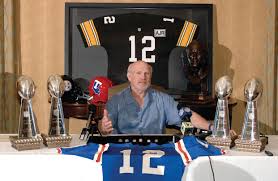
Terry Bradshaw's impact on the Pittsburgh Steelers franchise cannot be overstated. He transformed a perennial loser into the NFL's first four-time Super Bowl champion, establishing a winning culture that continues today. His number 12 jersey hangs retired in Heinz Field, a permanent reminder of his contributions to Steel City.
The statistical achievements tell only part of the story:
4 Super Bowl victories (1974, 1975, 1978, 1979)
2 Super Bowl MVP awards
3 Pro Bowl selections
1978 NFL MVP award
Hall of Fame induction in 1989
More importantly, Bradshaw's legacy lies in his transformation of the quarterback position in Pittsburgh. Every Steelers quarterback since has been measured against the standard he established – the ability to perform when championships are on the line.
The Enduring Champion
Today, Terry Bradshaw remains one of the most beloved figures in NFL history. His journey from struggling rookie to championship legend resonates with fans who appreciate both his athletic achievements and personal authenticity. The small-town Louisiana boy who became Pittsburgh's golden arm proved that greatness isn't just about talent – it's about perseverance, leadership, and the courage to rise after falling.
His story continues to inspire new generations of athletes and fans, reminding us that true champions are defined not by their early struggles, but by their ultimate triumphs. In the pantheon of NFL greats, Terry Bradshaw stands as a testament to the power of determination and the magic that happens when talent meets opportunity in the crucible of championship competition.
The legend of Terry Bradshaw lives on, forever woven into the fabric of Pittsburgh Steelers history and the broader narrative of NFL greatness.
Terry Bradshaw: The Steel Curtain's Golden Arm
From the dusty fields of Louisiana Tech to the hallowed grounds of Three Rivers Stadium, Terry Paxton Bradshaw carved his name into NFL history with a combination of raw talent, unwavering determination, and clutch performances that defined an era. The man who would become synonymous with Pittsburgh Steelers greatness didn't arrive as a polished superstar—he forged himself into one through grit, perseverance, and an unshakeable belief in his abilities.
The Making of a Champion
Born on September 2, 1948, in Shreveport, Louisiana, Bradshaw's journey to football immortality began in the heart of the American South. Growing up in a blue-collar family, young Terry displayed an arm that could launch footballs like rockets across the Louisiana sky. His father, Bill Bradshaw, worked as a Navy veteran and later in construction, instilling in Terry the work ethic that would serve him throughout his career.
At Woodlawn High School in Shreveport, Bradshaw's athletic prowess extended beyond football. He excelled in track and field, setting state records in the javelin throw—a skill that translated perfectly to his cannon-like throwing arm. College recruiters took notice, but it was Louisiana Tech University that captured his commitment, setting the stage for a collegiate career that would catch the attention of NFL scouts.
The Rookie Struggles That Forged Steel
When the Pittsburgh Steelers selected Bradshaw with the first overall pick in the 1970 NFL Draft, expectations soared higher than his spiral passes. However, the transition from small-college star to NFL quarterback proved more challenging than anyone anticipated. His early years were marked by struggles that would have broken lesser men—interceptions, fumbles, and the harsh criticism of Pittsburgh's notoriously demanding fanbase.
The 1970 and 1971 seasons tested Bradshaw's resolve like fire tests steel. He threw more interceptions than touchdowns, endured boos from the home crowd, and faced questions about whether he was truly franchise quarterback material. Yet beneath the surface struggles, something remarkable was happening—Bradshaw was learning, adapting, and building the mental toughness that would define his greatest moments.
"Those early years taught me that football, like life, doesn't hand you anything," Bradshaw would later reflect. "You earn every yard, every touchdown, every victory."
The Dynasty Years: Four Rings of Glory
The First Taste of Glory (1974)
The 1974 season marked the beginning of something special. Under head coach Chuck Noll, the Steelers had assembled a defensive juggernaut known as the "Steel Curtain," featuring legends like "Mean" Joe Greene, Jack Lambert, and Mel Blount. Bradshaw finally found his rhythm, leading Pittsburgh to their first-ever Super Bowl appearance.
In Super Bowl IX against the Minnesota Vikings, Bradshaw's steady hand guided the Steelers to a 16-6 victory. While the defense dominated headlines, Bradshaw's game management and crucial third-down conversions proved instrumental in breaking the franchise's championship drought.
Back-to-Back Brilliance (1975)
The following season saw Bradshaw elevate his game to new heights. His completion percentage improved, his decision-making sharpened, and his leadership became undeniable. Super Bowl X against the Dallas Cowboys showcased Bradshaw at his clutch best, throwing for 209 yards and two touchdowns in a thrilling 21-17 victory.
The game's defining moment came when Bradshaw launched a perfect 64-yard touchdown pass to Lynn Swann, a throw that seemed to hang in the air forever before finding its target. That pass epitomized Bradshaw's unique ability to rise to the occasion when the stakes were highest.
The Peak Years (1978-1979)
If the mid-1970s established Bradshaw as a champion, the late 1970s cemented his status as a legend. The 1978 season saw him throw for over 2,900 yards with 28 touchdowns, leading the Steelers to a dominant 14-2 regular season record.
Super Bowl XIII against Dallas became a showcase for Bradshaw's aerial artistry. He threw for 318 yards and four touchdowns, including a spectacular 18-yard scoring strike to Lynn Swann that demonstrated his ability to thread the needle under pressure. The 35-31 victory marked the Steelers' third championship in five years.
The 1979 season brought perhaps Bradshaw's finest hour. Despite battling injuries throughout the year, he saved his best for last. Super Bowl XIV against the Los Angeles Rams featured one of the most memorable performances in championship history. Bradshaw's 14-yard touchdown pass to John Stallworth with 1:49 remaining sealed a 31-19 victory and the Steelers' fourth Super Bowl title in six seasons.
The Warrior's Mentality
What separated Bradshaw from his contemporaries wasn't just his physical gifts—though his arm strength was legendary—but his mental approach to the game. He possessed an almost supernatural ability to perform under pressure, earning the nickname "The Blonde Bomber" for his clutch performances and fearless playing style.
Former teammate Franco Harris once observed: "Terry had this unique quality where the bigger the moment, the calmer he became. When everything was on the line, that's when he was most dangerous."
Bradshaw's leadership style was distinctly his own. He wasn't a rah-rah cheerleader but rather a lead-by-example competitor who earned respect through his willingness to take hits, make tough throws, and never back down from a challenge. His teammates knew that with Bradshaw under center, no deficit was insurmountable, no pressure too great.
Statistical Excellence and Records
Throughout his 14-season career (1970-1983), Bradshaw compiled impressive statistics that tell only part of his story:
27,989 passing yards
212 touchdown passes
Four Super Bowl victories (1974, 1975, 1978, 1979)
Two Super Bowl MVP awards (1978, 1979)
Three Pro Bowl selections
NFL MVP award (1978)
But numbers alone cannot capture Bradshaw's impact. His 9-4 playoff record and 4-0 Super Bowl record speak to his ability to elevate his performance when it mattered most. In Super Bowl games, he threw for 932 yards and nine touchdowns with just four interceptions—a testament to his clutch gene.
The Pittsburgh Connection
Bradshaw's relationship with Pittsburgh transcended football. He embodied the city's blue-collar values, its resilience, and its refusal to accept defeat. The steel mills that powered the city's economy mirrored the toughness that Bradshaw brought to the football field.
His impact on the Steelers franchise cannot be overstated. Before Bradshaw's arrival, Pittsburgh had never won a playoff game. By the time he retired, the Steelers had established themselves as the NFL's premier franchise, with four Super Bowl trophies serving as tangible proof of their excellence.
The "Steel Curtain" defense rightfully receives credit for the dynasty, but Bradshaw's offensive leadership provided the perfect complement. His ability to manage games, make crucial throws, and perform under pressure transformed the Steelers from perennial losers into champions.
Beyond the Gridiron: Broadcasting and Entertainment
Retirement in 1983 marked not an ending but a new beginning for Bradshaw. His transition to broadcasting proved as successful as his football career, bringing the same authenticity and charisma that made him a beloved teammate to television audiences across America.
Joining Fox NFL Sunday in 1994, Bradshaw became the show's breakout star. His folksy humor, self-deprecating wit, and genuine love for the game resonated with viewers who appreciated his down-to-earth approach. Unlike many former athletes who struggle with broadcasting, Bradshaw found his natural element in front of the camera.
His entertainment career expanded beyond sports broadcasting. Bradshaw released several country music albums, appeared in movies and television shows, and even competed on reality TV. His willingness to laugh at himself and embrace new challenges endeared him to audiences who might never have watched him play football.
Personal Life: The Man Behind the Legend
Bradshaw's personal life has been marked by both triumph and struggle, reflecting the complex nature of a man who achieved greatness while battling inner demons. His openness about his struggles with depression and anxiety helped destigmatize mental health issues for athletes and public figures.
Married four times, Bradshaw has been candid about his relationship challenges and personal growth. His current marriage to Tammy Bradshaw has provided stability and happiness in his later years. Together, they've built a life centered around family, faith, and their ranch in Oklahoma.
As a father and grandfather, Bradshaw has found fulfillment beyond football achievements. His daughters from previous marriages have given him grandchildren who know him not as a Hall of Fame quarterback but simply as "Grandpa Terry"—a role he cherishes above all others.
His ranch life in Oklahoma represents a return to his roots, where he raises horses and cattle while maintaining his connection to the land that shaped his character. The boy from Louisiana who conquered Pittsburgh has found peace in the wide-open spaces of the American heartland.
Faith and Philosophy
Throughout his life, Bradshaw's Christian faith has served as an anchor during both triumphant and turbulent times. He's been open about how his relationship with God has evolved, providing strength during his darkest moments and humility during his greatest successes.
His speaking engagements often focus on overcoming adversity, finding purpose beyond achievement, and the importance of authentic relationships. Bradshaw's message resonates because it comes from someone who has experienced both the heights of public adulation and the depths of personal struggle.
Legacy and Hall of Fame Recognition
In 1989, Bradshaw received the ultimate recognition when he was inducted into the Pro Football Hall of Fame. His enshrinement speech was characteristically humble and heartfelt, acknowledging his teammates, coaches, and the city of Pittsburgh that embraced him.
The Hall of Fame recognition validated what Steelers fans had known for years—that Bradshaw belonged among the game's all-time greats. His bust in Canton, Ohio, serves as a permanent reminder of his contributions to football history.
But perhaps his greatest legacy lies not in individual accolades but in the standard he set for clutch performance. Modern quarterbacks are often measured against the "Bradshaw Standard"—the ability to elevate one's game when everything is on the line.
Impact on Modern Football
Bradshaw's influence on today's NFL extends beyond statistics and championships. His approach to leadership, his mental toughness under pressure, and his ability to connect with teammates from diverse backgrounds established a template for modern quarterback success.
Contemporary stars like Tom Brady, Peyton Manning, and Aaron Rodgers have all acknowledged studying Bradshaw's game film, particularly his Super Bowl performances. His ability to make crucial throws in traffic and maintain composure under pressure remains a benchmark for quarterback excellence.
The Enduring Steel Legacy
Today, more than four decades after his first Super Bowl victory, Terry Bradshaw's impact on Pittsburgh and the NFL remains profound. His jersey number 12 was retired by the Steelers, ensuring that no future player will wear the number that became synonymous with championship football.
The "Terrible Towel" waves just as vigorously today as it did during Bradshaw's era, a symbol of the winning tradition he helped establish. When current Steelers players speak about the franchise's championship culture, they inevitably reference the foundation laid by Bradshaw and his teammates.
His statue outside Heinz Field serves as a daily reminder to players, fans, and visitors of what greatness looks like. Children who never saw him play learn about the quarterback who brought four championships to Pittsburgh, ensuring his legacy continues across generations.
Lessons from a Champion
Terry Bradshaw's life story offers profound lessons that transcend football. His journey from struggling rookie to Super Bowl champion demonstrates the power of persistence, the importance of learning from failure, and the value of surrounding yourself with great teammates.
His post-football success in broadcasting and entertainment shows that reinvention is possible at any stage of life. His openness about personal struggles has helped countless individuals feel less alone in their own battles with mental health and relationship challenges.
Perhaps most importantly, Bradshaw's story reminds us that true greatness isn't measured solely by individual achievements but by the ability to elevate those around you. His four Super Bowl victories were team accomplishments, but his leadership made them possible.
The Final Word
Terry Bradshaw's transformation from a small-town Louisiana kid to NFL legend embodies the American dream. His story resonates because it's fundamentally human—filled with struggles, setbacks, triumphs, and ultimately, redemption.
In an era when professional athletes often seem distant and manufactured, Bradshaw's authenticity shines through. Whether he's analyzing games on television, performing on stage, or simply being himself, he remains the same person who once stood in the pocket at Three Rivers Stadium, surveying the field with ice in his veins and fire in his heart.
The boy who threw javelins in Louisiana became the man who threw touchdown passes in Pittsburgh, and in doing so, he created a legacy that will endure as long as football is played. Terry Bradshaw didn't just win four Super Bowls—he showed us what it means to be a champion in every sense of the word.
His story continues to inspire new generations of athletes, broadcasters, and dreamers who understand that with enough determination, talent, and heart, even the most ambitious goals are within reach. In the end, that may be Terry Bradshaw's greatest victory of all.
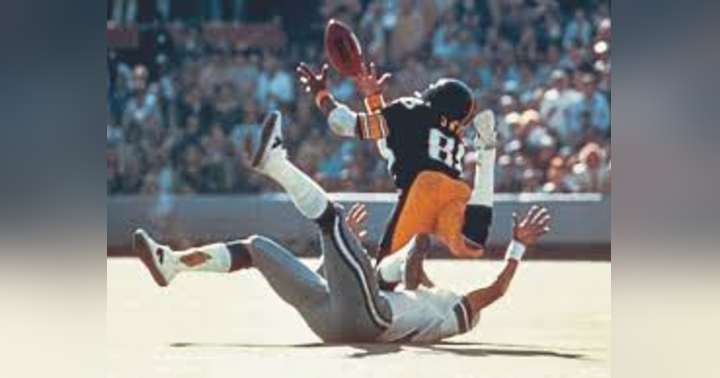
Legendary Steeler Lynn Swann